they are !! so cool !!!
ok so idk if you've heard but in case you haven't: these blobs of water are so punk!!
jellyfish have not changed for millions, billions of years. they literally said
you know what we're perfect just the way we are and they're so right!!
they're the living proof that you don't need brains in order to thrive.
they're so perfect in fact that they're thriving even more with all the bad
stuff that human activity does to the seas. that is, global warming contributes to jellyfish blooms and thus to their
esponential increase in number in our seas. this of course comes with its issues, as they can alter the balance of ecosystems.
it's not their fault tho, it's important to remember who's to blame.
once you move past the existential dread that they provoke at first sight, they're actually so stunning...
because im completely normal about these guys i'll show you my favorites.
phantom jelly (stygiomedusa gigantea)

isn't she absolutely TERRIFYING?? just imagine, for some reason you're swimming
in the midnight zone of the Gulf of Mexico (and the water pressure hasn't crushed you), then you see this...
don't worry tho, she doesn't sting.
this jelly is super rare, it's only been sighted 27 times in 27 years.
it only has four arms, which can grow up to 10m.
she's a weirdo, but we love her for that.

fried egg jelly / cassiopea mediterranea (cotylorhiza tuberculata)
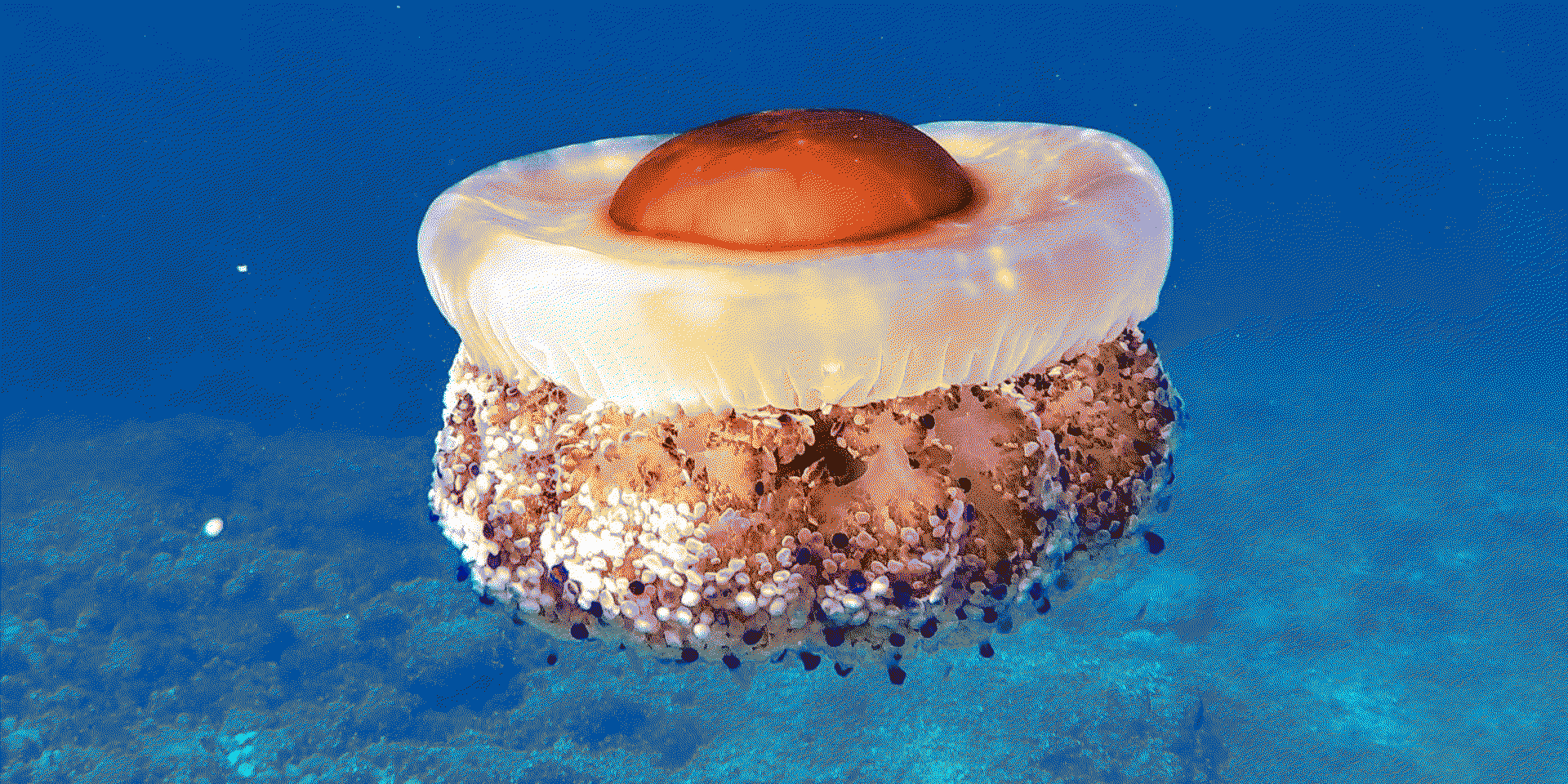
omg the colors she has!! the prettiest fried egg (uovo all'occhio di bue) you'll ever see.
she's not even that dangerous. some sources say that these broccoli ahh looking tentacles
don't sting, others that they do sting but only a little, in case you have sensitive skin.
these jellies can reach up to 40cm in diameter, but they're usually around 20cm.
they live in symbiosis with some algae (me and my house plants).
they're so cool that they're being studied in the treatment of breast cancer btw
(doi:10.3390/md11051728).

mauve stinger / medusa luminosa (pelagia noctiluca)
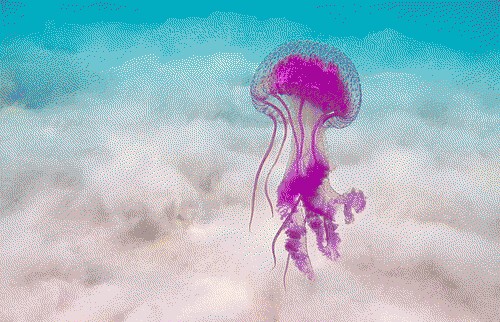
this one is a stinger alright, probably the jellyfish that stings the most in the mediterranean sea.
even its bell stings! however, it's not a dangerous sting, it's "only" quite painful.
not a fun fact but i have a short story:
once when i was little and swimming with some of my brothers and cousins near the coast, i saw one.
then another one. and another one. before i knew it, we were surrounded.
i was little and my oldest brother was carrying me on his back, but he didn't have his glasses on
so i managed to guide him and avoid the little demons. we got to a platform for plunges (our
initial destination), got up, saw the water swarming with purple dots, reorganised in a formation so that
the youngest (me and my cousin) were on the floaties and those who didn't need glasses were in
the front, and managed to get back to shore unharmed!!
surprisingly, i might have been less scared if it had happened at night:
they are bioluminescent! "noctiluca" comes from the latin combination
of "nox" (night), and "lux" (light). that's why they're commonly known as luminous jellyfish (medusa luminosa)
and night-light jellyfish.
they're quite small: the umbrella is around 10cm and the four oral arms (the thick ones)
can reach 30cm of length. but! their eight tentacles (the thin ones) are retractile and can
extend up to two meters!! they're not as visible as the oral arms, so if you ever see a mauve stinger,
be sure to stay a good distance from it.
one last thing, wikipedia calls them "opportunistic". it made me giggle, so here you go.

stellina bella* (marivagia stellata) *(there's no nickname yet)
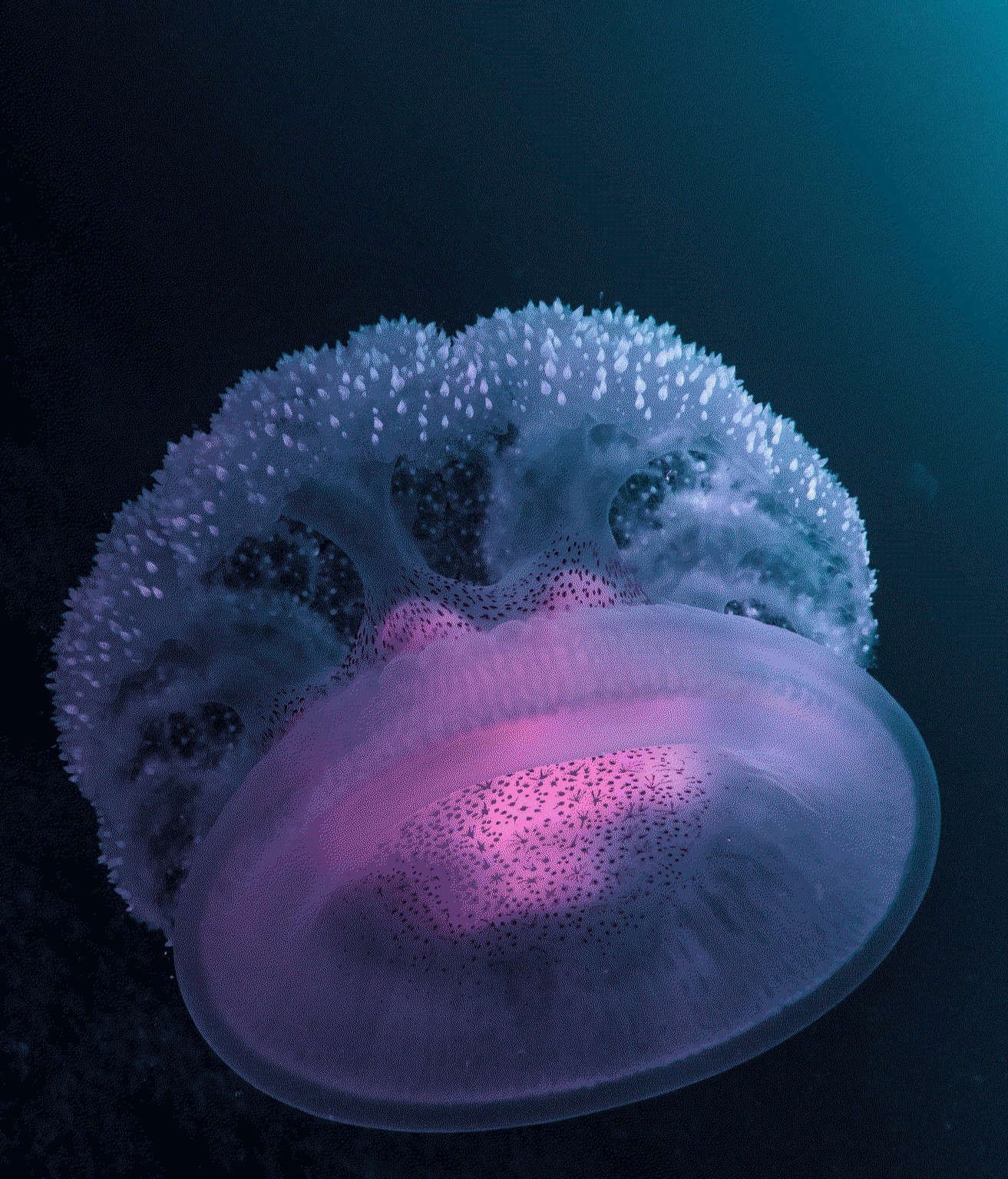

uugghhhh she's so pretty it hurts. Marivagia comes from the Latin "mari" (sea) and "vagus" (wanderer), while "stellata" means starry, from
the pattern on the umbrella. so poetic ♡
Marivagia stellata is the only species known to belong to the Marivagia genus (which makes it a
monotypic genus). this is because she has a unique shape, which kind of resembles a star.
she's pretty young, scientifically speaking: the first specimen to be described was found in 2010 near
the mediterranean coast of Israel, by the researcher Bella Galil. most likely this kind of jellyfish
has entered the Mediterranean sea through the Suez Canal.
this jelly is about 15cm in diameter. even though she reminds me a little bit of the Cassiopea
mediterranea, the Marivagia stellata can sting.
despite her pretty looks, she represents a grave danger in the mediterranean: this jelly is super invasive
and feeds on small fish and what fish usually feeds on. because she has been recently introduced, she doesn't have
any predators, and this gives her no containment. so if you ever spot one, be sure to document
and alert the competent authorities (jail).